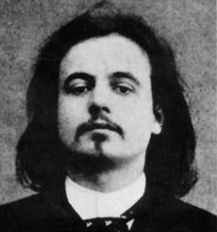
Friday, February 25, 2011

The Price of Dignity

It was raining here a few nights ago.  But nobody told me and I no longer go anywhere near the window that faces the street.  Not since the accident.  In consequence,  I wasn't wearing the right clothes.  I was expecting a dry, bitterly cold night.  Not the mild, rainy night I found.

To protect myself from the conditions I expected,  I was wearing highly absorbent "Polar Tech."  I didn't have an umbrella. Walking home, close to midnight, with three bags of groceries, I stayed close to the buildings, under the overhangs, trying to stay dry. I was hoping to avoid the hassle of getting my clothes professionally dried and, even more, that my watch would still work when I got home.

It isn't an underwater watch, after all.  It's good to a depth of zero.  It overreacts to fog. All it is, is the big old, dinged up Omega "Chronograph" I got from my stepmother after my father died.

Probably not certain he even intended to give the watch to me, he never bothered to explain it before I snapped the metal band around my left wrist,.

But you walk in the rain at night and you see things. A couple of bodegas still open.  A subway train pulls into the station and a voice inside makes an announcement I can't quite hear.  Two or three people hurry past me.  But you sometimes see things in the rain that make you forget about yourself and the rain and everything you ever thought you knew about doing whatever it takes to stay alive.

A homeless man had set up for the night in front of the post office.  I'd seen him there other times, living and sleeping in a pile of cardboard, plastic supermarket bags, newspapers and garbage.

He was hunched over,  doing something with his hands.  When I got closer I saw what it was.  He was giving himself a manicure, using both a trimmer and a cuticle tool that resembles a blunted knife.  Every few seconds the man stopped and held out both hands, palms down, to appraise his work.

"I couldn't do that," I thought,  "None of it. Not in a million years."

When I got home, I piled my soaked clothes on top of the radiator in the living room.  They'd be dry in an hour.   The rain continued until just past dawn.  I was dry for the night.

Saturday, February 5, 2011

The High School Lesson

This piece is more personal than my usual posts.  I'm not sure posting it is a great idea. What the f.

My father, who had money in those days, decided, probably more for his own ego than mine, to get me out of high school and into college, whatever it took. The way I saw it, only two things could do it.   Much higher grades and a miracle.   I guess that would be two miracles. 

My father talked to his friends, called everybody else and finally, found a way which satisfied “The Mission,” as he called it. With only a few days notice, he pulled me out of my Long Island public school class and, now half way through 12th grade, enrolled me in a very unusual and private (one to one) school he  found.  

The New York Tutoring School, since renamed the NOT ALLOWED TO SAY IT School, had existed and prospered since 1925, because of a never spoken arrangement designed to get troubled kids, with grades like mine, a genuine, recognized-by-the-state, good as gold, high school diploma.  A pot of gold at the end of my father’s private rainbow.

The classes at The Tutoring School were carefully monitored.  The moment a student began to have the slightest difficulty with a subject or assignment, that class came to an end.  The student’s most recent successful assignment or test became the student's final grade.  This all but guaranteed the final grade would be an "A".  To make certain there was no slippage, some classes, like geometry in my case, lasted only eight days.  Some students had even shorter courses. 

And so it was that abruptly and finally, the class simply disappeared from the schedule, the final grade recorded, the page turned.

I got straight A’s in everything and was thrilled.  Again without warning, late that spring, I was called to the head mistress’s office.  There I received my diploma. It happened in the privacy of a thickly padded, perhaps sound-proofed, office.  The room was green and poorly lit.

"Here," said the head mistresses, in a low voice, extending her right arm, the one with the hand that held the diploma.   She never made eye contact and the entire event took less than a minute. It was just me and Ms. McDermott, who insisted on being called Miz Mac-der-mot.

There was no Pomp, no Circumstance.  No nothing.  A real graduation ceremony, of the kind I would have received in public school, would have been impossible; The Emperor's New Diploma.

Finally, as painlessly as it had been from the beginning, it was over.  I never had to lift a pencil, though I did.  But lots of kids didn’t.  What  point?

I had excelled in every subject for that brief period and the grades that were sent on to college raised my average from the  D’s, F’s and incompletenesses  to which I was accustomed to, to a giddy C+.  I was delighted.  My “inner student” had emerged, I thought, just as I always suspected it would, given half a chance.

Despite the nature of my accomplishment I did learn a lesson I have never forgotten. The rules didn’t matter.  There is no “right” way of doing anything. Somebody or something, would always protect me from failure and the real world I had learned so much to fear.

Years later,  I wondered what might have happened without my father's help.  
The old adage, "What does not kill us, makes us stronger," might have applied.

Soon, however, I internalized the lesson and, in the fog of forgetting, the circumstances
of my remarkable come-back faded from my consciousness, replaced by a vague sense of magic and superstitious beliefs that are with me still.  

I believed in the magic that seemed to have saved me.  It surrounded my life.  But, unsure of just where the magic came from, I took no chances.  Not long after school, I began to wear charms on my fingers, wrists and around my neck.  Stones, metal things with funny markings, unusual rings and jewelry, that were gifts from special people. 

My belief in a special magic, always at the back of my brain, undoubtedly protected me from an unimaginable number of adventures and successes. 


*
A couple of funny things.  There were hand written notes on the report cards which accompanied the grades sent to my parents.  In the report cards Ms. McDermott wrote things that totally contradicted the grades.  Ms. McDermott ranted, raved and told another story in what she wrote.  One of mine read, “This boy is either too sick or too spoiled to ever amount to anything.”   When I found a few of these report cards a few years ago, I was shocked.  I had done so well at The Tutoring School.  What was all this crazy stuff about?  I thought she was crazy.

I also remember a few of the teachers, some of whom were real scholars, obviously in need of a few bucks.   Miss. Maitland comes to mind. She “taught” English Lit. but there was something wrong with her makeup.  It was perfect except that all of it was an inch and a half to the right of each feature.  Her red lipstick, for example, nearly missed her lips entirely, creating a kind of second mouth right next to the real one.  And her eye makeup didn’t start until the middle of her eyes and extended well beyond them.  There were other teachers I remember.   But that’s enough.

Monday, January 31, 2011

Bills Bar BQ and Other Mysteries of Wilson, North Carolina


The place is made to look like an old time dinner shack - using the "House of Blues" style of architecture.   Bill's Bar BQ in Wilson, NC has a slogan that comes right to the point,,  "From The Squeal To The Meal." it says  And they mean it. Because attached to the back of Bill's shack is stainless steel tunnel that descends about 100 yards to a large, windowless, rectangle of a building that can only be a piggie Auschwitz.

Inside Bill's, the tables have little, pink piggie salt and pepper shakers.  The clock on the wall is also a piggie, it's tail pointing to the hour.  But while  the ribs on your plate are falling off the bone (delicious),  the piggies in "Auschwitz" are being hooked through a shin and swept into an upside down position and put onto the assembly line, where automated blades quickly gut each piggie alive and send the carcasses down the line.

Wilson is a tobacco town about 60 miles from Raleigh and Diane's entire  family, on her mother's side, has lived there, in the same homes, on the perimeter of a 200 acre field for 150 years.

Searching for her history, Diane and I flew to Raleigh and drove down to Wilson, hoping to find the siblings and cousins and stories that had haunted Diane's mother for 77 years.

Martha was the first member of that family to ever make it over the wall, getting out of Wilson by marrying an army band leader from Everett, MA where they both eventually settled after the war. In the home where Diane was born and where her dad still lives.

The night we drove down was especially foggy.  Still, after driving around for half an hour, we found the fogbound field and the small shacks surrounding it.  We sat with the car running and the headlights on for fifteen minutes.

Out of the night fog, fog so thick you could only see about ten feet ahead, came the eyes.  Wide set, pale blue eyes.  Eyes just like Martha's.  The eyes belonged to Martha's remaining brothers and sisters;  Gillium,  Billy,  Little Billy, Yank and the women, Daisy and Hortense.  More, for a total of thirteen, were dead and buried.

We spent hours going from shack to shack and finding out what happened.  Gillium showed us his shotgun collection including, I remember,  a small "Ladies" shotgun.   The talk was mostly about Roselle, the father whose name was new to Diane. Martha had made a point of never, ever speaking her father's name, such was the trauma.

Roselle was an alcoholic and a brutal man.  He beat his wife and his children frequently, once beating Gillium nearly to death.  It was obvious that the children, all now in their 70's, still feared Roselle, who, within a few years, ran off and started another family not far from Wilson, never bothering to divorce the other Martha Matthews, Diane's grandmother.

More about all this in a later post.

Saturday, October 30, 2010

American Vestibule Inc.

Based on an obscure joke from ten years ago, I've started another blog that deal with the subject that formally occupied this spot.  The link is:   http://thehomeofamericanvestiuble.blogspot.com


Thursday, October 28, 2010

Google Scholar

This is very handy.


Google Scholar


Friday, October 22, 2010

Another Song Written and Performed by Richard Corey

Use this link:

http://soundcloud.com/alfred-jarry/can-i-be-the-one-from-the-richard-corey-album-can-i-be-the-one/s-NDBml

Hope you like.  He's playing lead guitar as well as singing.  I love it.

Thursday, October 21, 2010

From Spain, With Love (Circa 1979)

I went to a new place, where nobody knew me. One of the rare moments in a lifetime when you get the chance to start over, in another place, with new people.   The bitter truth is that, out of  self conscious fear and without any self awareness, I took on a new persona.  In this persona I was not myself.  Not any self I recognized.  The result was that the new people I encountered met, not me, but another person, the one I was auditioning to be and the person I must have felt I ought to be - an actor in an ill fitting costume.
In truth, I was cheating not merely the new people, but myself, sending people down blind alleys far away from whatever pleasure it is to know me.  I lacked the confidence in those days to put myself out there, to be myself, come what may. 

It is a crime of youth, and for a long while, I ran from myself. Not because of any intentional lies I was telling.  Not with any intention of hurting anyone.  What really made me uncomfortable was not an ill fitting costume but the truth that I was not being myself and only I knew it.  
In time, as always happens, no matter how hard you attempt  to hide it,  the pentimento shows through and people come to know you despite your mighty efforts to the contrary.  You are Sisyphus, asleep at the bottom of the hill, defeated.
Why is it so difficult to simply be yourself with everyone, all the time?  Why can’t these friends meet those friends?   In time,  you come to realize who you are and where you’re headed. When that happens, the courage to be yourself comes easily and the burden, the one you never really had to carry in the first place, is lifted.

Saturday, October 2, 2010

Friday, October 1, 2010

Sung By Richard Corey, just a few days ago

Here, my very dear friend,  Richard Corey (part of James Taylor's gang),  plays a favorite tune written by Eilen Jewell,  a singer Mr. Corey met a few years back:

Wednesday, September 15, 2010

Here in Astoria

A few questions, if you'd indulge me for a few seconds.  Are there absolutely NO architectural guidelines that must be followed before a building is allowed to be constructed in Astoria?.  What is behind the flaming love affair with aluminum siding?  Is it a mandatory part of the construction code?  I mean, do you go to jail?  The neighborhood looks like a wild party of aluminum siding salesman in 1965, were having some kind of contest, using Astoria as their playing field.   It’s an insult to the word “insult”, to hurl this at a potentially delightful, ethnic soup of a neighborhood.  But there you are.
The Greek food is phenomenal, in several restaurants. AND SPEAKING OF FOOD.  I was looking for a spatula the other day.  We needed one here, since not everything that went to the other house made it over here.   Anyway, it was simply an ordinary, commonplace spatula that I was looking for,  the kind one expects to find in any kitchen in the developed world.  So I looked for a spatula.  And you know what?  I might as well been looking for the lost continent of Atlantis.  I walked several miles, with my back the way it is.  I went into seven or eight “housewares” stores.  And you know what?  I did finally find two objects that anyone would call a spatula.   One was part of a tinny set of otherwise unnecessary items, like a ladle and knives - which we already have, and it cost $53 to boot, which was well beyond my budget.   
The other spatula deserves its own paragraph, because it’s the one I bought and  the one which now graces our kitchen, here on 29th Street and 23rd Avenue.  Let me describe it before you stop reading and tear your eyeballs out of your head.   In form and materials this object is every inch a spatula.  But inches are precisely the problem with it.  It looks like the spatula  King Kong or a T-Rex would flip their pancakes with.  The “blade” of this spatula is almost a foot long wide.  It won’t even fit into most of the pans I might want to use it for.  I bought it just so I could stare in amazement at it.
In any case, the two proceeding examples boil down the problem with Astoria in as easily a way as comes to mind, on this beautiful Wednesday afternoon in early fall.   Here in Astoria.

Wednesday, September 8, 2010

H a p p y B i r t h d a y, A l f r e d J a r r y

It is September 8th.  The 137th circumnavigation of the earth round the sun, since the birth of the great French playwright and discoverer of Pataphysics.  As mentioned in my previous post,  Jarry pioneered the "Theater of The Absurd" and is considered a singular force behind both Dadaism and Surrealism.  We owe much to Alfred Jarry.  So please, take a moment to toast* the birthday of a great man.

If you wonder why I carry on about Jarry to this extent,  it is because he has been a literary hero and inspiration to me since I was sixteen,  when my friend Gene took me to La Mama to see the phenomenal  Ubu Roi,  a viscous and terribly silly political satire.  And a play which still creates controversy whenever it is (so very occasionally) performed in France, more than 100 years after it was written.


*water or apple juice only please- out of respect for the whole absinthe thing, which probably killed him.

Saturday, September 4, 2010

A. J a r r y ' s B i r t h d a y - S e p t e m b e r 8


When Ubu Roi written by Alfred Jarry (1873 -1907)* was first produced in Paris in December 1896 the audience rioted at both preview and opening night performances, after which future productions of the play were banned for more than a decade. 
Why did they riot?   For one thing, the first word of the play is “Merdre” which is the French “Merd,” the equivalent of the English “Shit,” with an extra syllable added. They heard that, suffered a crises of composure, and never recovered because that was merely the first of a five-act attack on royalty, religion, and social mores, that comprise the play.  Ubu Roi might be considered lewd.   And parts of it remain shocking and offensive even to this day (September 10, 2010. 10:11 AM) in an age when the word “Shit” has morphed into a greeting for friends on the street (as in “Sheee-it, man, wus up?”)
Ubu Roi changed the world, not just the world of theatre, but the whole world as Jarry’s influence spread to other arts and then to society as a whole. Pablo Picasso, whose sketch of Jarry should have appeared above, (but is somehow missing) was fascinated by the work and bought many of Jarry’s manuscripts and possessions, most famously his pearl handled guns, after Jarry died. 
Ubu,(pronounced Oo-boo) is the name of the protagonist.   Ubu and his wife. are the principal characters, Père and Mère Ubu are often translated into English as Pa and Ma. 
The title Ubu Roi is usually translated as Ubu the King.  Jarry wrote two more Ubu plays – Ubu Cocu (Ubu Cuckolded) 1901 and Ubu Enchaîné (Ubu Enchained or Slave Ubu) 1900, neither of which was performed during his lifetime, and which are incoherent to the point of being un-performable. Jarry, it will be noted, was a known drinker,  enthusiast and popularizer of absinthe.  A 1901 puppet version of Ubu Roi called “Ubu Sur La Butte” or Ubu on the Hill, was allowed to run for 84 performances because it wasn’t being performed by live humans,  Precisely who the authorities thought were manipulating and doing the voices for the puppets remains a mystery wrapped in an enigma, carried by a man on horseback, dressed head to toe in white silk, singing “The Battle Hymn of The Republic”,  but their descendants must be the people who decided that Bert and Ernie were gay. This  was the same Ubu that Pablo Picasso, Guillaume Apollinaire, and other many other younger artists of Paris saw during that one performance and every day (or so), as one of their friends.
Much has been written about translation, even of words like Père, Mère, Roi, and others that people learn during their first year studying French,  The reason is that translating Jarry is extremely difficult because every word matters. Ubu Roi is not so much written in French as it is concocted from words and sounds, meaning that language is made to carry its original meanings and much more. 
Over the past century many productions of Ubu Roi have tried to sanitize and flatten Jarry’s play in every conceivable way.  Some  feel Ubu works better with puppets than with human actors:  It’s an unusual play. Not really so much a play as a collection of often non sequiturious lines that work very well coming from puppets.  If an actor has to say the lines, he or she might ask what motivates a particular line of dialogue.  Dialogue from a puppet may be a little easier for audiences to digest.  Or not.
“[Ubu is] the most extraordinary thing seen in the theatre in a long time.”  
            -André Gide, (1869 - 1952), novelist, essayist and winner of the Nobel
             Prize in Literature in 1947. 
Ubu Roi caused a full blown riot when first performed in Paris in 1896, and it retains its power to disrupt even to this day. The first run of Ubu Roi lasted  two performances, and young artists and writers like Picasso and Apollinaire who attended, were (and said they were) inspired by the work.
The play has an inherent silliness, a clowning aspect, while keeping all the ideas Jarry was exploring about greed and the abuse of power intact. 
Jarry’s Père Ubu was inspired by an unpopular teacher at Jarry’s school. And much of the rude schoolboy humor that fed Jarry’s imagination has tremendous influence on both high art and popular entertainment today.
The tradition of theatrical anarchy that Jarry started are preserved is loudly echoed in our modern art and writing. Whoever writes Homer Simpson’s dialogue and SJ Perelman who wrote Duck Soup for the Marx Brothers, had to have been aware of Ubu, Even though the play is more than 100 years old it is still very much alive. 
 * Jarry was born on September 8, 1873.  If he were alive today he would be
    have just turned 137.   

Sunday, August 29, 2010

Baseball Tonight

The Yankees won tonight.  They still have "The Best Record in Baseball"  But they have not been winning.  They are losing half their games since A-Rod went on the disabled list a few days ago. Still, even though he didn't play tonight, the Yankees won.  Because they scored a lot of runs. But that, it's been drummed into my head, is pitching.  In this case, bad  pitching by their starter.  


I still don't really understand why so much of the game depends on pitching.  Even great hitters can't hit great pitching. It never, or very seldom ever, happens.  And I'm so tired, I'm actually writing about baseball. I'm going to regret it.    


And I'm  realizing, as I read this back, that all my baseball knowledge, day to day,  is just the verbatim  repetition of what commentators said on tv or radio. All of it.  I very rarely have an independent as well interesting observation about a game, a player or anything to do with the game.   


And later, I'm talking to a guy who watched or listened to the same game and we'll both repeat exactly what we both heard from the  same announcers at the  same time. And it's like, wow, yeah.  Why do we do this?  It must be comforting, the repeating of things we all already know and have heard a million times.  It is a ritual. Just like church. Maybe he National League should merge with the Catholic church, whose attendance is flagging.  I mean they the church and baseball already have so much in common. The sacrificial fly.  The trinity of the pitcher, batter and catcher.  Going home.  And now,  I'm going to bed. I'm sorry for anybody who read this all the way through.  It's just neurons, radomly firing.  Not thinking.  Not anything.

Sunday, August 22, 2010

A Brief History of Alfred Jarry

        This is Neither Alfred Jarry Nor a Pipe*
    
                (Figure 2)


                (Figure 2)


Author of "Ubu Roi" (Ubu The King), a masterpiece that prefigured the Dadaist and later Surrealistic movements,  he was also the father of Pataphysics, the science of exceptions or imaginary solutions.   This was Alfred Jarry.  "Ubu Roi" is still still produced,  but not nearly enough.  In its time, it was considered a vicious, even dangerous, political satire, its street language scandalized theater critics and it closed after a single performance. 


On occasion Jarry,  all 5' 1" of him, rode his bicycle through the streets of Paris with two, fully loaded, pearl-handled pistols holstered at his side.  He is known to have fired one or both of the pistols several times.  Witnesses differ on the number of shots fired but on one point there was unanimity, Jarry never pointed at anything but sky.  Jarry was also a prolific inventor.  He designed and built a time machine masw of brass, wood, ivory and as many dials an gauges as an atomic submarine.  Several artists saw the time machine,  but never sat in it, as far as anyone knows.  Still considering his fame or infamy, it seems peculiar that nobody (not even Picasso) had any idea what became of it.  I failed to locate it in the possession of any museum or private art collection.  It may well have not survived.  The time machine would, however explain Jarrry's sudden disappearance at the age of 34, on the night of November 1, 1907.  Newspapers the next day said that Jarry had died.  There was a funeral several days later.   But after so many years, it is difficult to separate what is true from speculation.  Born on September 8, 1847, he became, with Picasso, a major influence on the arts and letters of the time.  Jarry foresaw "Theater of The Absurd" as well as the Dada and Surrealistic movements.   At the same point in time, Picasso was creating Cubsism.


* The caption over the above picture of Alfred Jarry is, of course, borrowed from 
Marcel Duchamp's 


Surrealistic 
masterpiece called, ""This is not a pipe." (See figure 2*) 
It hangs in the Louve